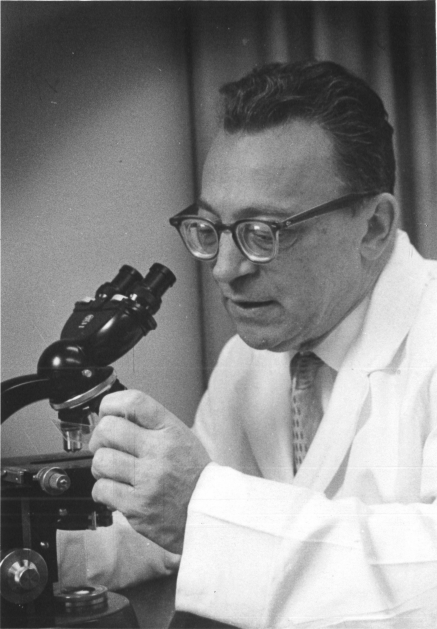
Oscar Auerbach
|
|
| (Photograph, undated). Dr. Oscar Auerbach served on the faculty of New Jersey Medical School for over 30 years. His studies demonstrating the link between smoking and cancer were hugely influential in anti-smoking research and policy. (Special Collections, George F. Smith Library of the Health Sciences) |
|
Worker’s Compensation
|
 |
| (Pamphlet, 1934.) |
|
AIDS
|
 |
| (Pamphlet, 1989). |
|
Almanacs
|
 |
| (Almanac, 1880). |
|
Oxypathy
|
 |
| (Pamphlet, undated). |
|
Railroads
|
 |
| (Pamphlet, 1884.) |
|
Lyme Disease
|
 |
| (Pamphlet, YEAR.) Lyme disease is an illness caused by bacteria transmitted through the bite of a tick, and often features a bull’s-eye rash. Named after the Lyme, Connecticut location of some early cases, the disease has become endemic throughout all of New Jersey. Prepared by Dr. Leonard H. Sigel, the manual above is an early guide for New Jersey clinicians, and diagnosis and treatment of Lyme disease is still debated today. |
|
James Still
|
 |
| (Frontispiece portrait, 1877.) James Still (1812-1882) was a self-educated and highly successful homeopath and herbalist known as the “Black Doctor of the Pines.” In 1877, he published his autobiography, “Early Recollections and Life of Dr. James Still,” featuring the portrait above. The copy of this book held in RBHS-Special Collections is inscribed by Still’s daughter-in-law Elizabeth, whose husband, James Thomas Still, was one of the first African-American graduates of Harvard Medical School. |
|
Fees
|
 |
| (Pamphlet, 1820.) From its very beginning in 1766, establishing tables of fees for services was an important function of the Medical Society of New Jersey. In these fees set in 1810, “Every first visit and opinion by the consulted Physician or Surgeon, exclusive of travelling fees,” was charged four dollars. |
|
Vineland Training School
|
 |
| (Article reprint, 1909.) The Vineland Training School in Vineland NJ was among the earliest institutions developed for supporting and researching individuals with mental deficiencies. From 1906 – 1918, the Director of Research was Henry H. Goddard. A psychologist and staunch eugenicist, Goddard translated the Binet intelligence test into English in 1908, and was a proponent of intelligence testing in other institutional settings such as the United States Army and Ellis Island. |


